

Social media is constantly evolving, and one new player, BlueSky, could change the game by 2025. Let’s explore what it is, why it’s gaining attention, and its potential impact on the future of social media.
What is BlueSky?

BlueSky is a decentralized social media platform built by Twitter co-founder Jack Dorsey. Unlike traditional social media platforms controlled by one company, BlueSky allows users more control over their data and content. It’s based on an open-source protocol called AT Protocol, enabling multiple servers and groups to interact freely.
Why is BlueSky Gaining Attention?
BlueSky is gaining traction for several reasons:
- User Control & Privacy: It prioritizes data privacy and gives users more control over their content, which appeals to privacy-conscious users.
- Decentralization: The platform is not controlled by one entity, allowing for innovation and more personalized experiences.
- Open-Source: Being open-source, it invites contributions from the community, which could lead to unique features and better transparency.
How Will BlueSky Affect Social Media in 2025?
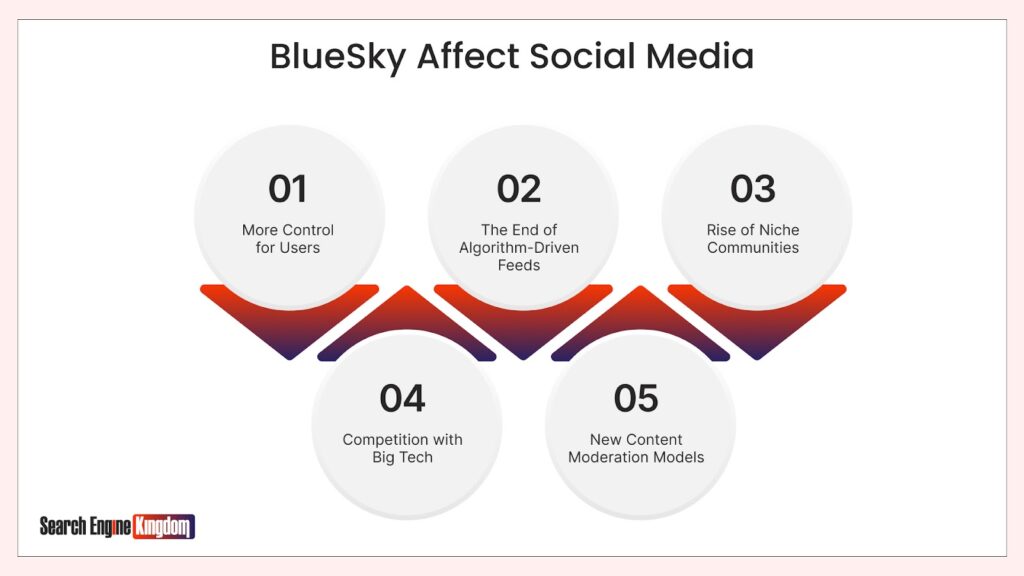
1. More Control for Users
BlueSky’s decentralized model could spark a trend where users demand more control over their data and how their content is shared. For example, on BlueSky, users manage their data and decide who sees their posts, unlike Facebook or Instagram where the platform controls your audience. This trend towards user control could influence other platforms to adopt similar privacy features.
2. The End of Algorithm-Driven Feeds

BlueSky allows users to create custom feeds, letting them choose exactly what they want to see. For instance, BlueSky’s feed customization could lead other platforms like Instagram and TikTok to reconsider their engagement-based algorithms and offer users more control over their content preferences.
3. Rise of Niche Communities
BlueSky’s decentralized structure encourages the creation of smaller, specialized communities. Platforms like Reddit and Discord already thrive on niche communities, and by 2025, we may see even more growth in hyper-targeted groups. This means users could gravitate toward platforms that support smaller, personalized groups with common interests.
4. Competition with Big Tech
If BlueSky grows, it could challenge the traditional business models of big tech companies like Facebook and Instagram, especially around privacy and user control. For example, BlueSky‘s rise might push Meta and other social media giants to rethink how they manage user data and interactions, possibly adopting more user-centric models.
5. New Content Moderation Models
BlueSky’s decentralized model may lead to community-driven content moderation, encouraging a shift away from centralized control like YouTube or X (formerly Twitter). For example, platforms such as Reddit have community voting on content, and BlueSky’s influence could prompt a broader discussion about how platforms should balance free speech and censorship.
Conclusion
BlueSky’s decentralized approach could significantly transform social media by 2025, offering users greater control over their data, encouraging niche communities, and challenging traditional business models of big tech. As privacy concerns and user autonomy become more prominent, BlueSky may inspire other platforms to adopt similar features, pushing the entire industry toward more transparent, user-centered experiences. This evolution could redefine how we interact online, shaping the future of social media.
For more insights on the future of social media, visit Search Engine Kingdom.